In one of our guest blogs for the Greater Manchester Green Summit, Adam Leslie, Director at Deloitte discusses Manchester’s vision for becoming a world-class transport city centre and shifting from car reliance to an integrated and sustainable system.
According to Greater Manchester’s Transport Strategy 2040, currently, around 60 per cent of journeys in Manchester are made by car (driver or passenger), compared with 40 per cent via public transport and other modes. A long-term objective must be to reverse that balance if we are to achieve our growth ambitions as a city. This is more than simply improving infrastructure – it requires real behavioural change, placemaking and a transport system that genuinely competes with the conveniences of driving.
At this week’s Green Summit in Manchester, I joined a panel of leaders from business, industry, public health and local government to explore the question: how does transport underpin a thriving global city region?
People unlock opportunity
There was a common thread running throughout the discussion in that transport is not simply about moving people – it’s about unlocking opportunity. Access to opportunity must lead that strategy, with jobs remaining at the heart of how the Bee Network is designed and delivered.
Ultimately, transport systems succeed when they connect people to employment, education and services in a reliable and inclusive way. If people cannot easily commute to jobs then businesses will struggle to access talent, communities will become disconnected and growth will stall. Having the right integrated transport infrastructure in place eradicates that threat and is therefore fundamental to ensure the prosperity of the region
The most powerful enabler of place-based growth
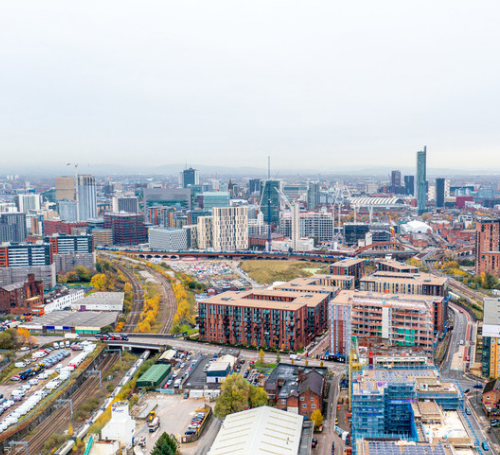
Across the UK and internationally, we’re seeing a shift towards transport-led regeneration. This is increasingly visible in Greater Manchester where development is clustered around rail, tram and bus infrastructure, creating higher-density, mixed-use neighbourhoods that reduce reliance on cars and support sustainable living.
Building homes closer to rail is convenient and also encourages investment and increases land value, while stimulating commercial activity and creating vibrant communities that are connected to the whole city region. In that sense, the Bee Network is much more than Manchester’s transport strategy – it becomes a critical economic development strategy.
Learning from successful blueprints
The panel also reflected on comparisons with London, which has long provided a template for integrated, multi-modal transport. However, Greater Manchester has its own unique communities and growth ambitions, so rather than replicate this model like-for-like, it is focused on applying key learnings and creating a new, bespoke model.
The Bee Network is central to that ambition, contributing to Manchester’s evolution as a world-class city region. The continued transition to electric vehicles, an area where Manchester is already outperforming counterparts, further supports cleaner air and decarbonisation goals, while giving people a purpose for choosing public transport over a car journey.
Delivering that outcome also requires a different approach to financing and risk. Transport systems are complex, long-term investments where demand, revenue and cost pressures inevitably fluctuate. Models such as franchising allow public authorities to take a more strategic view of those risks – managing them at a system level rather than leaving them solely with individual operators – and creating the stability needed to invest in better services and modern infrastructure.
Connectivity beyond the city
No discussion of regional transport would be complete without reference to national connectivity and the call for tighter rail links between central hubs such as Manchester, Liverpool and Leeds with London remains a prominent theme in discussions about the North’s economic future.
Improving inter-city connectivity would not only strengthen business relationships, but also reinforce Greater Manchester’s role within a broader Northern economic corridor.
A system shaped for the future
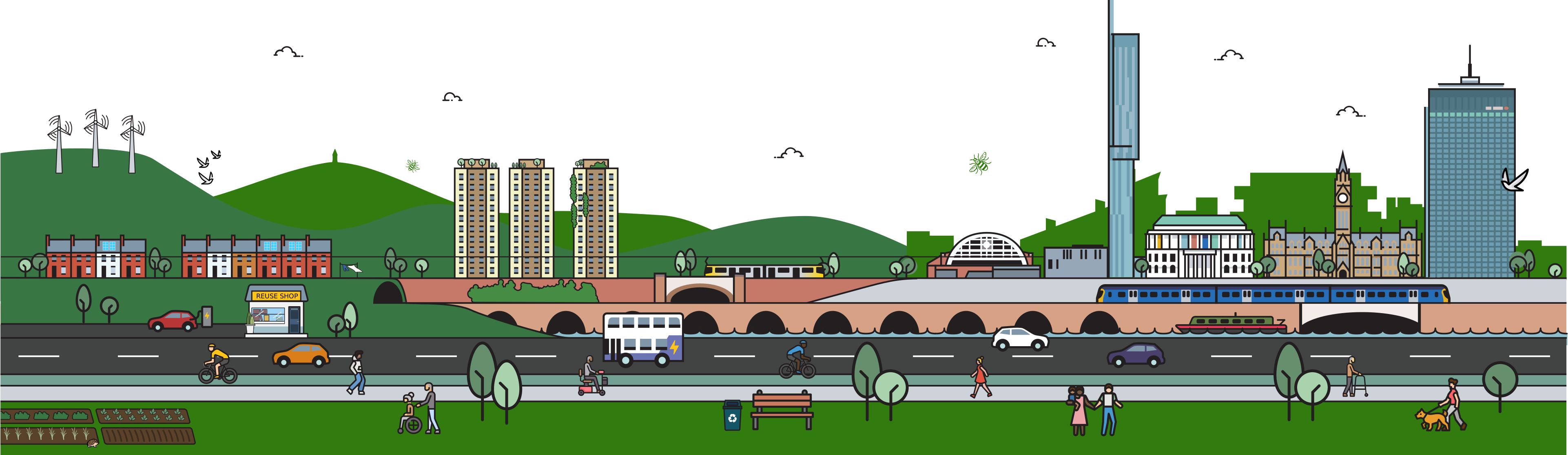
The Bee Network represents more than buses and trams under a unified brand. It signals a real shift towards more integrated place-based planning where transport, housing, employment and sustainability strategies are aligned.
Achieving that integration also requires careful consideration of commercial structures and long term financial sustainability. Moving towards a fully integrated network allows cities to align investment decisions across fleet, depots, ticketing systems and digital platforms, while planning for the transition to net zero over decades rather than individual contract cycles. In that sense, transport reform is not just operational change – it’s a fundamental shift in how cities plan, fund and manage their mobility systems.
Ultimately, transport is the foundation on which inclusive economic growth is built so, when designed around access to opportunity, it becomes the connective tissue of a thriving global city that Manchester is well on its way to become.